How to Choose a Custom Home Builder in Boise
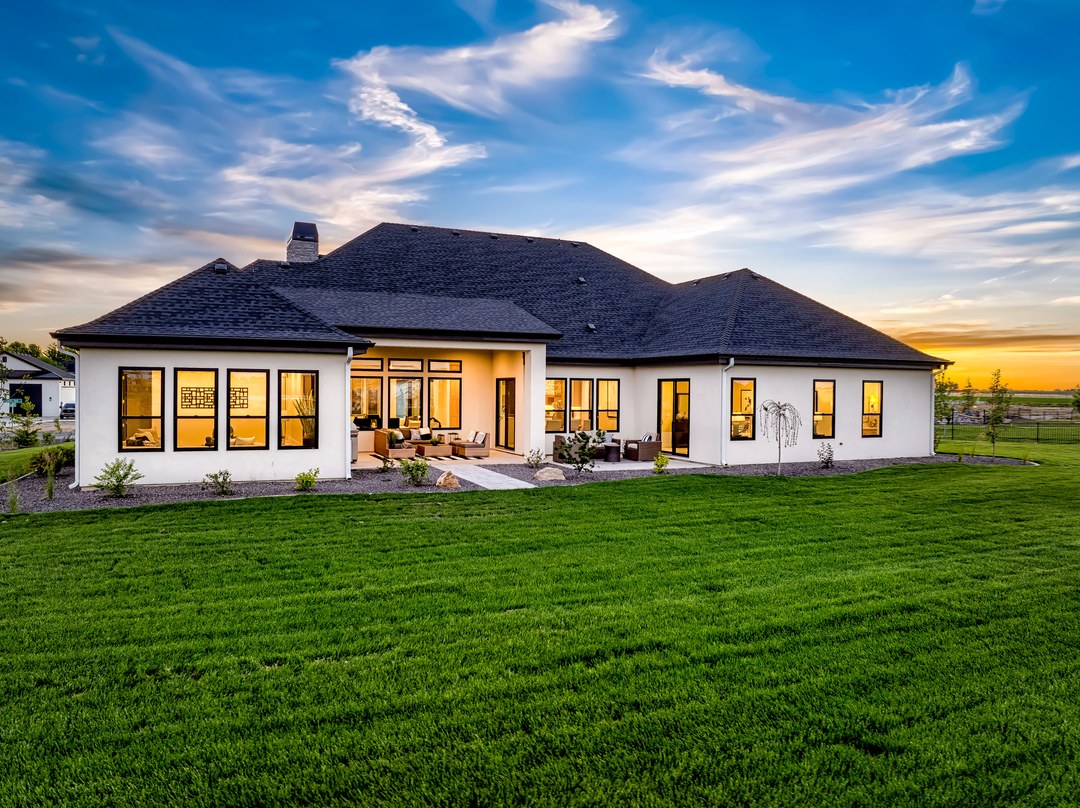
What Sets Custom Home Builders Apart
A custom home builder works with you to design and construct a house tailored to your site, budget and how you actually live. That is different from a production builder working through a catalog of plans, and different again from a design-build firm that handles architecture and construction under one contract. Custom builders typically work with the architect you hire separately, then price and build that design.
The structure matters because it determines who you are negotiating with at each stage. When you hire a custom builder, you own the plans. You can get competing bids. You also carry more risk if something goes sideways, because there is no single entity responsible for both design and execution.
Most people building in Boise work with a local custom builder. The model gives you control over finishes, room sizes and site-specific details like how the house sits relative to the Foothills or handles a sloped lot. It also means more decisions—and more opportunities to spend money you did not plan to spend.
What to Ask Before You Hire Anyone
Start with projects like yours. A builder who does high-end hillside homes in the Northend may not be set up for a ranch remodel in Meridian, and vice versa. Look at finished work, but also ask about lot types, price ranges and whether they self-perform trades or subcontract everything. Builders who frame and finish in-house tend to have tighter schedules and more control over quality, but fewer of them exist than a decade ago.
Ask how they handle allowances. An allowance is a placeholder number in your contract for something not yet selected—tile, fixtures, appliances. If the contract includes a low allowance and you pick what you actually want, you will fund the difference. A builder who uses realistic allowances up front is easier to budget with than one who makes the initial number look good.
Find out who manages the schedule and how often you will hear from them. Some builders provide weekly updates and a shared portal where you can see trade schedules and change orders. Others communicate when there is a problem. Neither is wrong, but you should know which you are buying.
Licensing and Insurance in Idaho
Idaho requires residential contractors to register with the state and carry liability insurance. Verify both. Also ask about builder's risk insurance during construction—it covers the structure if something happens before you close. Some builders include it in their fee; others expect you to arrange it separately.
Check references, but ask specific questions. How did the builder handle an unexpected site condition or a delayed material? Did the budget hold, and if not, why? You learn more from how someone manages a problem than from whether everything went perfectly.
How Local Conditions Shape the Build
Boise sits in a high-desert climate with cold winters and low humidity. That affects everything from foundation design to HVAC sizing. A builder familiar with local soils knows whether your lot needs engineered fill or a deeper footing to handle expansive clay. They also know which trades are busy when, and how to stage a project so you are not waiting three months for a framer in the spring rush.
Permitting timelines in Ada County and the cities vary. A straightforward single-family home in an established neighborhood might permit in six weeks. A complex design or a lot in the Foothills with wildfire overlay requirements can take longer. Builders who work regularly with local jurisdictions can estimate that better than someone new to the area.
Utility hookups and impact fees also vary by city. Meridian, Eagle, and Boise each handle water, sewer and street improvements differently. Your builder should be able to explain what is included in your contract and what the city or a utility district will charge separately.
Fixed Price or Cost-Plus
Most custom home contracts in Boise are fixed-price, also called stipulated sum. The builder gives you a total number based on your plans, and that is what you pay unless you make changes. Cost-plus means the builder charges actual costs plus a fee—usually a percentage or a flat monthly amount. You pay for what the work actually costs, with less risk to the builder and more to you.
Fixed-price contracts require detailed plans before you sign. If the drawings are incomplete, the builder has to guess at quantities and specs, and those guesses become change orders later. Cost-plus contracts let you start earlier with less-developed plans, but you are trusting the builder to control costs without a cap.
Neither structure is inherently better. Fixed-price makes sense if you have finished plans and want budget certainty. Cost-plus works when you need to start before design is finalized, or when site conditions are uncertain enough that a fixed price would include a large contingency you might not use.
What Happens After You Sign
Pre-construction starts with permits, site work and ordering long-lead items like windows and trusses. Builders typically ask for a deposit or initial draw when you sign, then bill according to a schedule tied to construction milestones. You will make selections for anything not fully specified in the contract—cabinets, countertops, plumbing fixtures, paint colors.
The build itself moves through foundation, framing, mechanicals, insulation, drywall, and finishes. Each stage has an inspection. Your builder schedules those, but you can attend if you want to see what the inspector looks for. Most people visit the site weekly or biweekly. More often than that and you risk slowing the trades down.
Expect the process to take nine to fourteen months for a typical single-family home, depending on size and finishes. That includes design and permitting time. If you are starting from raw land with no utilities, add time for that work before the builder can start the foundation.
If you are planning a project in Boise or the Treasure Valley, start by talking to a few builders about your site and what you want to build. A good fit matters more than a low bid.